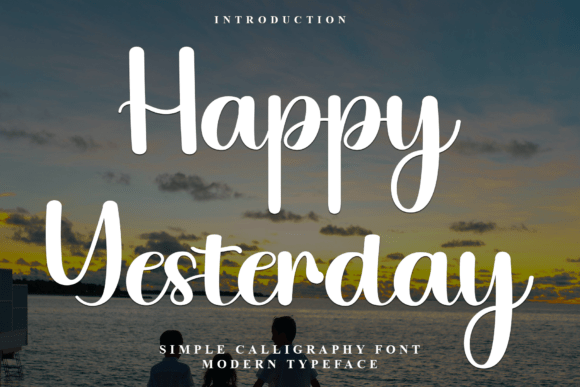
Happy Yesterday: A Soft Script Font for Crafters
As a maker who spends hours perfecting the curve of a sticker or aligning text on a candle label, I know that typography is not just about reading; it is about feeling. When you hold a handmade item, the font choice tells a story before the customer even reads the words. This is why discovering Happy Yesterday felt like finding a missing piece in my design toolkit. It is a beautiful and eye-catching font designed with a soft, unique touch that bridges the gap between professional polish and handmade charm.
In the world of Script Amp and creative Fonts, finding a typeface that balances distinctiveness with readability can be challenging. Happy Yesterday offers distinctive strokes that give it a special character, making it meaningful and versatile for future use. For those of us running small shops, creating printables, or designing wedding stationery, this font serves as a reliable anchor for brand identity while adding a layer of emotional appeal that generic fonts simply cannot match.
Bringing Warmth to Handmade Products
The visual personality of Happy Yesterday is rooted in its softness. Unlike rigid geometric sans serif fonts or overly ornate display fonts that can feel distant, this script font feels approachable. It mimics the natural flow of a handwritten note, which is exactly the vibe many customers seek when buying from Etsy sellers or local boutiques. The strokes are fluid but controlled, ensuring that the text remains legible even when scaled down for small product labels or tags.
I have found this font particularly effective for physical products where space is limited but impact is crucial. For example, when designing labels for soy candles or artisanal soaps, Happy Yesterday allows me to highlight the scent name or brand logo with elegance. The soft touch of the letters complements natural textures like kraft paper, linen, or matte glass. It does not compete with the product; instead, it enhances the perceived quality, suggesting that care went into every detail of the creation.
Versatility Across Craft Projects
One of the most valuable aspects of Happy Yesterday is its versatility. While it shines as a decorative wording option for titles and short phrases, it is robust enough to handle various applications across different mediums. Here are a few ways I integrate this typeface into my workflow:
- Wedding Stationery: The romantic flow of the script makes it ideal for invitation suites, save-the-dates, and welcome boards. It pairs beautifully with floral illustrations and watercolor backgrounds.
- Printable Wall Art: For digital downloads, Happy Yesterday adds a personal touch to quote prints and nursery decor. Its distinctive strokes stand out well against minimalist backgrounds.
- Product Packaging: From hang tags on clothing to stickers on bakery boxes, the font maintains its charm at smaller sizes, provided the spacing is adjusted correctly.
- Seasonal Crafts: Whether it is a farmhouse-style sign for autumn or a delicate holiday card, the font adapts to the mood without losing its core identity.
For Cricut and Silhouette users, working with a script font requires attention to detail. Happy Yesterday is designed with connectivity in mind, which means it cuts cleanly when using vinyl or heat transfer materials. However, always check the connections between letters in your design software before cutting. Adjusting the size ensures that the delicate parts of the distinctive strokes do not become too fragile for weeding.
Readability and Practical Design Tips
While Happy Yesterday is undeniably attractive, practical readability must always come first. As a general rule, I reserve this font for headlines, names, and short descriptors rather than long paragraphs. Script fonts are best used for emphasis. If you are creating a product description tag, use Happy Yesterday for the product name and pair it with a clean sans serif font for the ingredients or instructions. This contrast improves legibility and creates a balanced hierarchy.
When using this font for small stickers or business cards, test print your designs at actual size. What looks clear on a large monitor may blur when printed at one inch wide. Ensure there is enough breathing room around the letters. The soft touch of the font should not turn into a muddy blob due to poor ink spread or low-resolution printing. High-quality mockup previews are essential here to gauge how the font interacts with your chosen material.
Pairing and Brand Consistency
Building a recognizable brand identity relies on consistent typography. Happy Yesterday works exceptionally well when paired with simple, modern typography. A light weight sans serif font provides a neutral base that lets the script shine. Alternatively, pairing it with a classic serif font can create a more traditional, vintage aesthetic suitable for antique shops or heritage brands. Avoid pairing it with another busy script font, as this can create visual clutter and reduce the impact of both typefaces.
Consistency extends beyond just the font choice. Use Happy Yesterday across all your touchpoints, from your social media graphics to your packaging inserts. This repetition helps customers recognize your brand instantly. When they see those distinctive strokes, they associate them with the quality and warmth of your handmade goods.
Licensing and Commercial Use
Before incorporating any new typeface into your commercial projects, it is vital to understand the licensing terms. Happy Yesterday is a premium font, and using it for selling physical products, templates, printables, or digital downloads requires the appropriate commercial license. Always review the specific agreement included with the font files. Most standard commercial licenses allow you to use the font in end products like t-shirts, mugs, and printed invitations that you sell to customers. However, embedding the font file itself in a downloadable template or using it for logo design may have different restrictions.
Check the included files for styles, alternates, ligatures, and swashes. These features can add significant value to your designs by allowing customization. For instance, using a swash on the capital letter of a name can make a wedding invitation feel bespoke. Ensure the font supports the languages you need for your target market, as multilingual support varies between typefaces.
Incorporating Happy Yesterday into your design assets is an investment in the aesthetic quality of your work. It offers a blend of beauty and functionality that resonates with customers looking for something special. By using it thoughtfully in your labels, signs, and digital creations, you elevate your products from simple items to cherished keepsakes.